Regions - France
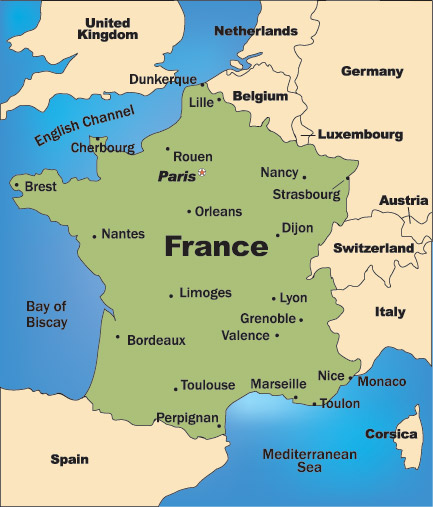
Paris
Paris speaks for itself in monumental language everyone knows - the Arc de Triomphe, Champs-Elysées, the Louvre, the Eiffel Tower, the Seine, Notre Dame, Versailles, and the Opera. It was the seat of kings and emperors, the birthplace of artists, and it is now ready to welcome you! Any time here is a well-spent introduction or closing to the best French experiences.
The Loire Valley
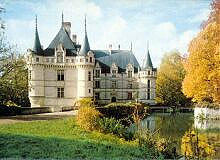
The Loire Valley stretches south and west of Paris, centering on Orleans. It is a beautiful, rolling plain of farms, aristocratic country estates, and of course the beautiful chateaux from centuries past. It is easily reached from Paris as a guided daytrip, but we recommend taking your time and enjoying the hospitality and local produce a chateau-hotel can offer you.
Normandy
Normandy is the Atlantic coastland closest to Paris, its beaches on the English Channel beautiful and peaceful reminders of the sacrifices of the Allies to liberate the country, but bearing testimony back to time of the Vikings and Celts. The landscape is almost exactly the same as a half-century ago; farms, cows, grassland, stately towns like Caen, Honfleur, and Bayeux. Normandy is particularly quiet and beautiful in the fall, an ideal time for a French honeymoon.
Brittany
Brittany runs west of Normandy to land's end just past the pretty port town of Brest. It contains some of the best French national parks, country inns with proud local chefs, and great driving. On its Norman border is Mont St-Michel, the amazing castle and abbey on an island separated from the coast by sand and tide.
Burgundy
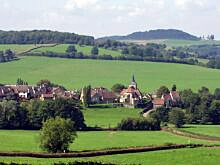
Burgundy is a fertile, wine producing region extending south from the rapidly developing town of Dijon to the sprawling market city of Lyon in the Rhone Valley. It is home to some of the most famed castles and cathedrals in the country, and ideal for agricultural tourism and backcountry driving.
Provence
Provence is an evocative, romantic district of rich hills, valleys, and mountains north of the French Riviera. It is home to historic towns including Aix, Arles, and Avignon, all featuring beautiful religious architecture and thriving country markets. Provence is easily accessible via the high-speed TGV trains from Paris, or by car from Nice, but really requires a car to get around.
The Southwest - Bordeaux and Toulouse
The largely untouristed southwest of France is characterized by the lovely limestone valleys of the Dordogne, the cave-riddled hills of Perigord, the farms, ruins, markets, and wine cellars of Bordeaux and Toulouse, and the Pyrenees Mountains, with considerable Basque and Spanish influence in culture and cuisine. This is an excellent region to connect with Barcelona or Bilbao in Spain by car or train.
French Riviera - Nice
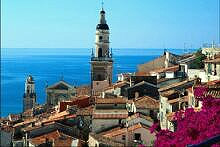
Nice is gateway to the Cote d'Azur, one of the most beautiful coastlines of the Mediterranean, with narrow sandy beaches and dramatic cliffs. While well-developed for tourism, many areas of the coast are not quite as crowded as metropolitan nice itself, and quiet afternoons in open-air cafes can be found in Cannes, St-Tropez, and Cap-Martin. The Cote d'Azur is ideal for a waterfront resort escape and hobnobbing with the international jetset, but also perfectly combinable with Provence or even the calmer Italian Riviera.
Monaco
Monaco is worth a special trip from France, the little principality dramatically embraced by cliffs coming down to meet the sea. It features one of the best opera houses in Europe, and its casino is known everywhere as The Casino. Staying in the central district of Monte Carlo is pricey and posh, but there are more modest options as well above and alongside the main downtown. Easily accessible from Nice.
Alsace, Champagne, & the Borderlands
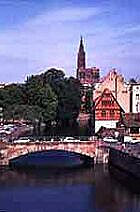
Alsace is a northeastern region of the French countryside with a discrete culture, cuisine, and tradition, heavily influenced since the Middle Ages by what is now Germany. Nearby Lorraine offers more of a mix of French and German influences, but both regions are crowned with numerous reminders of the conflict between the two cultures and countries - huge medieval fortifications and modern battle sites. It is beautifully forested and ideal for history buffs. A favorite city is Strasbourg on the Rhine, with wonderful restaurants.
Excursions from Alsace: South of Alsace you can drive or train into the Black Forest, perhaps stopping in Freiburg (Germany) the heart of the Grimms' fairy tale landscape and home to beautifully preserved and restored medieval streets and towers. North of Alsace, you can visit Champagne and the Ardennes forest, seeing war memorials and sleepy hilltowns, and perhaps even driving or training up to Luxembourg, Bastogne (Belgium), or even to Brussels, an oft-overlooked gem combining traditional cuisine and architecture with friendly, modern convenience, and English spoken everywhere. Some honeymooners may even choose to start in Paris, wind their way through Brussels, and end in the canals and coffeehouses of Dutch Amsterdam for an easy flight home.
Corsica
Corsica is just a short flight (or ferry ride, if you're not on a tight schedule) from the mainland, but a world away in terms of experience. The battlemented coastal towns and wild, thickly grown interior contribute to an atmosphere of stepping back in time. There are both world-class resorts and modest, historic inns in evocative towns like Ajaccio, Bonifaccio, and Calvi, all of which offer simple but artful nightlife, including local music, bistro cuisine, and even a bit of gambling, if you like. Smaller islets off the coast afford opportunities to explore virtually untouched ruins, reefs, and rocks.