Regions - Tanzania
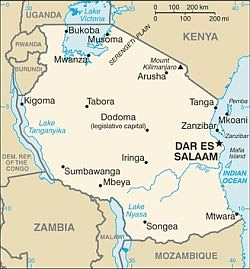
The country of Tanzania is a standout when it comes to out-of-the-ordinary honeymoons. By far the most popular route in Tanzania is the "Northern Circuit" consisting of The Serengeti, Ngorongoro Crater, Lake Manyara and Tarangire National Park. Following is a synopsis of these and other interesting areas of the country to consider as part of a special trip:
The Serengeti
Located in the northwest part of the country, are arguably home to the best game viewing – and best safaris – on the planet. Tanzania and southern Kenya bear annual witness to something called "the migration", where hundreds of thousands of zebra and wildebeest traverse the Serengeti and Masai Mara plains in search of fertile feeding grounds. As the rains move, so too do the animals, their sheer numbers blanketing the expansive plains as they migrate. This is a sight to behold, and one that draws visitors from around the globe, especially during June, July and August. That said, game view is outstanding at any time of year, and even more diverse in the absence of thousands of wildebeest. One can expect to see hyena, abundant sightings of lion, giraffe, leopard, elephant, gazelle, impala, topie, jackal, buffalo, warthog and many others. This is a "must visit" part of Tanzania for animal lovers.
Ngorongoro Crater
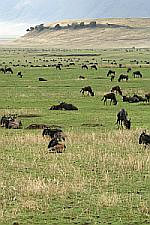
Perhaps the most famous spot to visit in Tanzania, the Ngorongoro Crater is definitely unique. Formed millions of years ago when a volcano of the same name collapsed leaving a giant caldera, it is now a captive home to upwards of 30,000 animals (depending on migratory patterns), including many rhino, which are otherwise quite rare in Tanzania. You can also see zebra, hippo, wildebeest, lion, jackal, hyena, gazelle, buffalo, baboons and monkeys, among others. Visitors often stay on the rim of the caldera, which has a cooler climate due to the altitude. Safaris commence in the morning on steep roads into the caldera. It is important to note that you will see many other safari vehicles during the course of a day because this small area is a popular place to visit. Between the crater and the Serengeti, you can also stop to see Olduvai Gorge, the "Cradle of Mankind", where archeologist Louis Leaky discovered some of the world's earliest hominid remains, dating back to more than 2 million years ago.
Lake Manyara
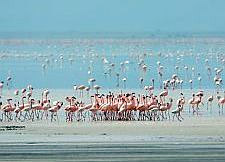
Located between Ngoronogoro and Tarangire, Lake Manyara is an excellent place to spend a day or two. The soda-based lake is home to an incredible array of birdlife, including thousands of resident flamingoes. Another curiosity is its lion population, which has somehow acquired the habit of climbing trees, although you have to be a bit lucky to see them in action. Hot springs, acacia forests, marsh areas and grasslands act as home to hippos, elephants, buffalo, giraffe, and many baboons.
Tarangire National Park
Only a short drive from Arusha, this park is named after the Tarangire River, which is a major draw for animals, particularly during drier times from June through November. It is also know for its large concentrations of elephant, which are less abundant in other northern parks. Other sightings will be buffaloes, giraffes, waterbucks, kudus, Oryx, lions, leopards, hyenas, and possibly tree climbing pythons. Another reason to visit Tarangire is for its varied scenery – in one park you can see plains with acacia and baobab trees, swamps, forest, and bush steppe. It is a very diverse place to visit.
Arusha & Mt. Kilimanjaro
The city of Arusha is the typical starting point for safaris in northern Tanzania, including the Serengeti and the Ngorongoro Crater, and most visitors will spend a least one night here are some point. It resides in the shadow of Mt. Meru, Africa's 5th tallest peak. It's a good place to unwind after a long flight, do a first day of safari in Arusha National Park, and pick up a few souvenirs at the busy local markets.
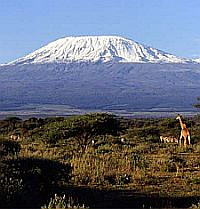
Mt. Kilimanjaro, "Kili" as it is known locally, is the highest peak in Africa. Often shrouded in clouds, views of its glacier-capped summit dominate the landscape for miles around. Many visitors come to Tanzania just to climb Kili; this typically takes around 5-6 days depending on the route. Unique about this mountain is that it can be scaled by someone in good physical condition: it does not require technical mountain climbing expertise. Altitude is a factor, however, and many trekkers find they can't make it to the 19,340 ft summit. Consider it carefully, however, if you think you'd like to do this on your honeymoon; it is very physically taxing.
Zanzibar
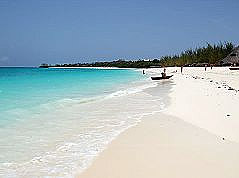
A short flight from either Arusha or Dar es Salaam, Zanzibar and its neighboring islands are a colorful and exotic feast for Western senses. Historically it served as a crossroads for traders plying their wares and spices across the Indian Ocean, leading to the cultural mélange one finds today. You could spend days exploring the historic flavor and labyrinthine streets of the capital Stonetown, although most visitors now come for the island's gorgeous white sand beaches and excellent snorkeling and diving. If time permits, 4 to 7 days in Zanzibar are ideal at the beginning or the end of a safari itinerary.
Other areas
For as popular as the "northern circuit" of Tanzania is, the "southern circuit" made up of The Selous, Ruaha and Katavi National Parks is not. These national parks are very remote, and are typically only reached by charter flights, making them more expensive to visit. But those who do are rewarded excellent game viewing and complete solitude. A few semi-permanent lodges exist in these areas, and as a result, mobile camps or fly camping can be an excellent way to delve into these enormous parks.
Lake Tanganyika helps form Tanzania's border with Burundi, The Democratic Republic of the Congo and Zambia. A beautiful if remote area, people come here to see the chimpanzees of Mahale Mountains National Park and Gombe Stream National Park. In the last couple years a small number of luxury lodges have opened which can also make Lake Tanganyika a good substitute for a seaside beach experience – diving, snorkeling, fishing and boating are all available.
Many visitors will pass through Dar es Salaam, Tanzania's largest city and key administrative center. There are a few markets and museums, but mainly this is a jumping off point for those going to Zanzibar or catching an international flight. Fortunately there are a few nice hotels in which to relax prior to moving on.