Regions - British Isles
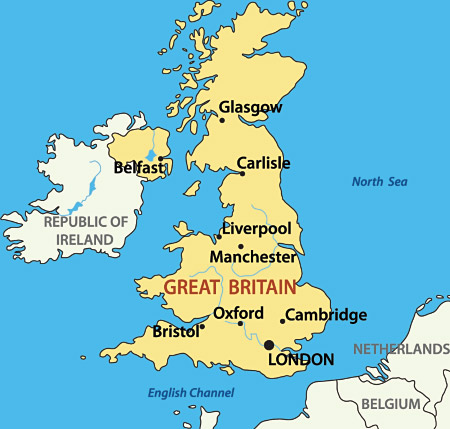
London, Stratford, & the Cotswolds
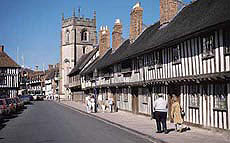
London is a bustling postmodern city with a rich past, full of the pomp and circumstance of the royals and the modern government - Buckingham Palace, the Tower of London, the Parliament, Big Ben - and the posh hipness of upscale neighborhoods and clubs in the west and north of the residential city. It also contains a thriving arts and theater scene, and the infamous tube to get you anywhere you're going. Famous train stations take you away from the city to Oxford, Stratford, and the Cotswolds, sleepy hill towns inhabited since Roman times and now the retreats of students, Shakespeareans, and wealthy Londoners, respectively.
Cornwall and Wales
Cornwall is the beautiful, forgotten spit of hills and coastline jutting out towards Ireland and the Atlantic beyond - a hard-working land of mines and farms, which seems to be content with its rural peace and open land. Ruined churches and abbeys, and much more recent inns and bed and breakfasts dot the countryside, which feels in many ways like Brittany and Normandy in France.
Wales sits in its rocky throne, crowned by tiny towns and castles too numerous to count. Its inhabitants are friendly and warm, and very proud of their history and land. While largely off the tourist track, Wales is definitely worth a visit for its language, ruins, and the modern vitality of cities like Cardiff and Newport. Backcountry hunting lodges are wonderful bases from which to explore the rivers and hills of Wales, and from which to catch a glimpse of the varied flora and fauna of this unique region
The Lake District
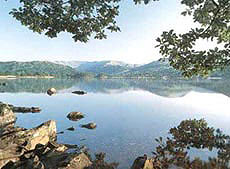
The Lake District is emblematic of the England of the poets, a rolling, wooded land near the border with Scotland, containing famous, placid lakes like Windermere and Keswick. Wonderful manors and country houses await you, serving as wonderful bases for hiking, ruin exploring, and fireside evenings of good food and music.
Edinburgh and Glasgow
Edinburgh and Glasgow are less then an hour apart near the southern border of Scotland, and have wonderfully different characters. Edinburgh is dramatic in natural setting and businesslike in spirit, its castles and venerable townhouses welcoming travelers by sea and by air, and offering excellent restaurants and museums. Glasgow has only entered the world tourist map in the past ten years, revitalizing itself with artistic enclaves and shops from distinctly down-to-earth, working-class roots. Both are worth a visit even if just passing through on the way north.
The Great Glen
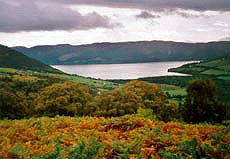
The Great Glen is bordered by the central highlands of Scotland, which stretch north in two columns from the border, one branch heading towards hilly Perth and Aberdeen (with wonderful golf and seashore), the other stretching all the way north to lonely Ullapool and the Great Highlands and Islands. The Glen, which contains Loch Ness and the central drainage of the country, cleaves the midlands, spiked with castles and lovely towns.
Dublin and County Meath
Dublin is a charming, busy city by the River Liffey, founded on a Viking outpost near the Irish Sea. Famous for its poets and writers as well as its brewers and pubs, the modern city is home to excellent museums, restaurants, hotels, and inns. The Temple Bar district comes alive after dark with visitors from throughout Europe and America wishing to share a pint of Guinness.
Waterford and Wexford
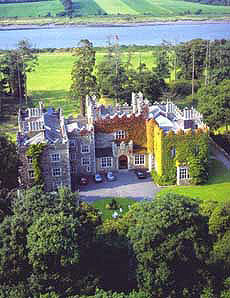
Waterford and Wexford are the Viking cities of the southeast, with strong Norse heritage, castles, and walls giving proof of the fascinating contact between civilizations here in the Middle Ages. Now both working-class ports, these cities are charming and unpretentious, with wonderful shops purveying the wares of the great glass and pottery factories of the South. Inland from both cities are excellent country inns and pretty driving - this area is especially attractive as the goal of a drive starting in Dublin, which takes you through the stunning Wicklow mountains, with their forest glens and valley monasteries.h
Cork
Cork is a great industrial city set in some of the most beautiful country in southwest Ireland. A major center for tourism because of its waterfront, its pretty sister port of Kinsale, and Blarney Castle just to its inland flank, it has witnessed a true renaissance in the past decades and is becoming a desirable city for business and residence.
Kerry and Dingle
To the west and northwest of Cork are two lovely peninsulas looking out across the Atlantic. Iveragh peninsula is accessed via Killarney, and is home to the Ring of Kerry, a major tourist route because of its relatively even driving along a beautiful coastline studded with castles, Celtic forts, stone circles, cliffs, and everything else you'd want to see in Ireland. More preferable from a romantic and peaceful point of view is Dingle, accessed through Tralee. More narrow and mountainous, this stunning spit of land ends in massive Slea Head, which itself breaks into the pyramidal Blasket Islands. People on Dingle still speak Gaelic, and craftsman make authentic musical instruments and pottery for local consumption, rather than the tourist market. The central port of Dingle is one of the most charming in Europe.
Shannon and Galway
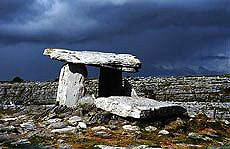
Shannon is the second major air hub for access to the island. Once home to only a wool market and pirate-era pub (both of which are still there), it is now a thriving tourist trap with admittedly excellent shops and restaurants. To the south across the river are the massive expanse of Limerick and the medieval town of Adare, and to its north are Lahinch and the Cliffs of Moher, the Burren - a stark landscape of wildflowers, limestone, and stone circles - and Galway, once a horse market and fairgrounds and now a center for the arts. The wonderful, timeless Aran Islands are just a short flight or ferry from Galway.
Connemara
Connemara is a forested, rural series of highlands stretching northwest of Galway. Lakes and mountains emerge from misty mornings to hikers' delight, and hilly towns like Ballynahinch and Clifden welcome all visitors to wonderful pubs and shops. This is the perfect region of Ireland to get happily lost in on car or foot.